
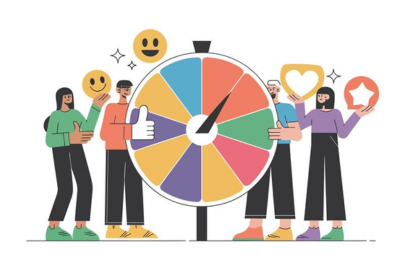


Gamified Surveys: Combating "Respondent Fatigue"
Online market research has become the backbone of modern decision-making. From market entry assessments and product validation to brand tracking and customer experience studies, organizations increasingly rely on digital data collection to guide strategic choices. However, as the volume and frequency of surveys continue to grow, a critical challenge has emerged: respondent fatigue.
For senior leaders evaluating market research services, respondent fatigue is not a tactical issue. It is a strategic risk that directly affects data reliability, insight accuracy, and ultimately business outcomes. As companies seek higher engagement and better-quality responses across global audiences, gamified surveys are gaining attention as a viable solution when applied with discipline and methodological care. This article examines respondent fatigue, its impact on online market research, and how gamified surveys can help address it when designed and governed correctly.
What is Respondent Fatigue?
Respondent fatigue refers to the decline in a participant’s attention, motivation, and cognitive engagement while completing a survey. As fatigue sets in, respondents may rush through questions, provide superficial answers, select repetitive response patterns, or abandon the survey altogether.
Common indicators of respondent fatigue include:
- Increased drop-off rates mid-survey
- Straight-lining across scale questions
- Random or inconsistent responses
- Reduced time spent per question
- Higher incidence of “don’t know” or neutral selections
These behaviors compromise the integrity of data collected through online market research and can skew insights at scale.
Respondent Fatigue vs Survey Fatigue
Although related, respondent fatigue and survey fatigue are not the same.
- Survey fatigue occurs when individuals are repeatedly invited to participate in research over time, leading to declining willingness to take part.
- Respondent fatigue occurs during the survey itself and affects how thoughtfully participants answer questions once they have agreed to participate.
For market research firms, this distinction is important. Survey fatigue affects recruitment and sampling. Respondent fatigue affects data quality and insight validity within an active study.
Read Also: The Power of Online Market Research
Common Causes of Respondent Fatigue
Respondent fatigue is rarely the result of a single design flaw. It typically emerges from a combination of structural, cognitive, and experiential factors.
Key contributors include:
- Excessive survey length: Long questionnaires increase cognitive load and reduce sustained attention, particularly among senior or niche respondents.
- Repetitive question formats: Overuse of grids, scales, and matrix questions can quickly disengage respondents.
- Poor user experience: Surveys not optimized for mobile devices or modern interfaces increase friction and frustration.
- Complex or abstract language: Poorly worded questions demand unnecessary mental effort and increase dropout risk.
- Misaligned incentives: In paid market research, respondents assess effort versus reward. When the balance feels unfair, engagement declines.
- Cross-cultural challenges: In international marketing research, linguistic nuance and cultural context significantly influence respondent comprehension and motivation.
For organizations conducting research across multiple regions, these issues compound quickly if not proactively managed.
Read Also: Understanding Global Markets: 11 Types of International Market Research Services Explained
How Respondent Fatigue Impacts Online Market Research
Respondent fatigue has consequences that extend far beyond incomplete surveys. It undermines the core value proposition of online market research: reliable, scalable insight.
Key impacts include:
- Reduced data quality: Fatigued respondents provide less thoughtful answers, increasing noise and variance in datasets.
- Biased findings: Disengaged responses can distort trends, especially in attitudinal or perception-based studies.
- Higher operational costs: Low-quality responses require replacement sampling, extended fieldwork, and additional validation checks.
- Delayed decision-making: Poor engagement slows data collection, affecting time-sensitive business decisions.
- Increased risk for small businesses: For market research for small businesses, limited budgets magnify the consequences of flawed data.
For decision-makers, these risks translate directly into strategic exposure.
Read Also: Unimrkt’s Engagement Models: Tailored Market Research for Small Businesses
What are Gamified Surveys?
Gamified surveys integrate selected elements of game design into the research experience to improve engagement without compromising methodological rigor. The objective is sustained participation and cognitive involvement.
Gamification in market research services typically focuses on:
- Making progress visible
- Reducing perceived effort
- Encouraging completion
- Improving response quality
When applied correctly, gamified surveys support the same research objectives as traditional surveys while enhancing the respondent experience.
It is important to distinguish gamified surveys from informal or entertainment-driven tools. Professional gamification remains grounded in research principles and data governance.
Can Gamified Surveys Address Respondent Fatigue?
Gamified surveys can reduce respondent fatigue when used selectively and strategically.
They help by:
- Breaking long surveys into manageable stages
- Providing visual feedback on progress
- Introducing interaction that sustains attention
- Making complex tasks feel more intuitive
However, gamification is not a universal solution. Its effectiveness depends on research objectives, audience profile, and study context.
For stakeholders evaluating market research consulting partners, the key question is not whether gamification is innovative, but whether it is appropriate for the decision being informed.
Read Also: Finding the Right Market Research Agency in India
Key Gamification Elements Used in Surveys
Professional market research firms typically rely on restrained, purpose-driven gamification techniques.
Common elements include:
- Progress indicators: Clear milestones help respondents understand effort required and reduce abandonment.
- Interactive question formats: Drag-and-drop ranking, clickable visuals, and scenario selection improve engagement.
- Scenario-based decision tasks: Respondents evaluate realistic situations, improving the quality of trade-off data.
- Visual feedback cues: Subtle design elements reinforce progress without distracting from content.
- Structured rewards: Incentives aligned with effort expectations support participation in paid market research.
Each element must be evaluated against research goals and respondent profiles.
Read Also: 5 Ways Paid Market Research Industry is Changing Thanks to AI
Best Practices for Gamified Survey Design
Effective gamified surveys are the result of deliberate design choices, not decorative enhancements.
Best practices include:
- Align gamification with research objectives: Engagement mechanisms should support, not overshadow, the insight being measured.
- Maintain methodological discipline: Question wording, scales, and logic must remain statistically sound.
- Adapt for global audiences: International marketing research requires sensitivity to cultural norms and digital literacy.
- Balance novelty and clarity: Overly complex interactions can confuse respondents and reduce data reliability.
- Pilot and validate: Pre-testing ensures that gamification improves engagement without introducing bias.
This is where experienced market research consulting partners add measurable value.
Where to Exercise Caution with Gamified Surveys
Gamification is not suitable for every research scenario.
Caution is required when:
- Research involves sensitive topics such as health, finance, or compliance
- Studies require strict comparability with historical benchmarks
- Respondent populations have low digital familiarity
- Regulatory or audit standards mandate traditional formats
Over-gamification can also distort respondent behavior, leading to performance bias rather than genuine opinion. Business leaders should view gamification as a tool, not a default setting.
Why Partnering With Professional Market Research Consultants Matters
Designing effective gamified surveys requires expertise across methodology, technology, and respondent psychology.
Professional market research firms provide:
- Governance over research design and execution
- Quality control frameworks for online data collection
- Cross-market cultural and linguistic expertise
- Compliance with international research standards
- Secure handling of respondent and client data
For organizations making high-impact decisions, this level of rigor is essential.
Improving Data Collection Through Thoughtful Survey Design
Gamified surveys can support higher-quality outcomes when used selectively, reinforcing both respondent engagement and the credibility of research findings. With over 16 years of industry experience, Unimrkt Research applies this same discipline to the design and execution of gamified surveys, ensuring that engagement techniques are grounded in sound methodology, global research standards, and data integrity rather than novelty. The organization has conducted multi-industry research in more than 90 countries across America, Europe, Asia Pacific, and Africa. Unimrkt supports research execution in over 22 foreign languages and adheres to ESOMAR norms. The company is certified under ISO 20252 for market research quality management and ISO 27001 for information security management.
This foundation enables Unimrkt to deliver reliable online market research, international marketing research, and customized solutions for organizations of all sizes. To learn how we can help you with research design and implementation needs, contact us at +91-124-424-5210 or email sales@unimrkt.com. Alternatively, you can fill out our contact form, and our team will reach out to you shortly.
Frequently Asked Questions
Q1. Are gamified surveys suitable for senior decision-maker audiences?
Yes, when designed with restraint and purpose. Gamification in professional online market research focuses on clarity, flow, and engagement rather than entertainment, which aligns well with senior respondent expectations.
Q2. Do gamified surveys affect data comparability with traditional studies?
They can if not planned carefully. Market research firms typically evaluate benchmarking requirements in advance to ensure continuity, especially for tracking studies and longitudinal research programs.
Q3. Are gamified surveys more expensive than traditional surveys?
Not necessarily. While design may require additional expertise, higher engagement and better completion rates often reduce re-fielding costs and improve overall research efficiency.
Q4. Can gamified surveys be used effectively in international marketing research?
Yes, but only with proper cultural and linguistic adaptation. Professional market research consulting ensures that interactive elements translate accurately across regions and respondent contexts.
Q5. How do gamified surveys improve outcomes in paid market research?
They help balance effort and incentive by making participation feel more intuitive and structured. This leads to improved response quality and lower dropout rates in paid research environments.
Q6. Are gamified surveys appropriate for market research for small businesses?
They can be highly effective when research objectives are tightly defined. For small businesses, improved data quality can significantly enhance the value derived from limited research budgets.
Q7. How do market research firms ensure data integrity in gamified surveys?
Through rigorous pilot testing, validation checks, and quality control frameworks. These safeguards ensure that engagement features do not introduce bias or distort respondent behavior.
Q8. What role does market research consulting play in successful gamified surveys?
Market research consulting services, such as those from Unimrkt Research, provides strategic oversight, ensuring that gamification supports business decisions while remaining compliant with research standards and data security requirements.
Quick Enquiry
Customer Service, We Make it Better
Recent Posts
- How to Clarify and Align Your Research Goals for Maximum Impact
- Mining Valuable Data: The Driving Force for an Effective Growth Marketing Strategy
- Speaking the Customers Language: 7 Tips for Meaningful Qualitative Research
- Creating Value for Investors: The Benefits of Primary Market Research
- Utilizing Closed-Ended Questions For Quantitative Market Research
- Capturing the Changing Interests of Millennials Through Qualitative Research
- Refining Unit Economics with Robust Quantitative Market Research
- A Concise Guide to Quantitative Market Research
- 3 B2B Market Research Trends That Could Shape 2024
- Eyes on 2024: Changes That Might Disrupt the Healthcare Industry This Year
- Cracking the Language to Make Survey Questions Inclusive in 2024
- Attracting Investors: How Market Research Can Solidify Your Case
- Solid Foundations: Ways to Enhance Trustworthiness in Qualitative Research
- What Makes CATI Research So Effective?
- Moderator Qualities That Improve Qualitative Market Research
- 5 Consumer Market Trends That Will Define 2024
- What are the strengths of quantitative research?
- How to Make Your Partnership with Primary Market Research Firms Fruitful
- A Quick Guide to Harnessing the Strengths of Quantitative Research
- Advice from Your Research Partner: Don't Compromise Quality on Online Surveys